
Fakeit: Imposter Game
smak appsWord
4.6750.00 Reviews
- Version
- 1.27.0
- Installs
- 5.00M
- Age Rating
- Everyone
Screenshots


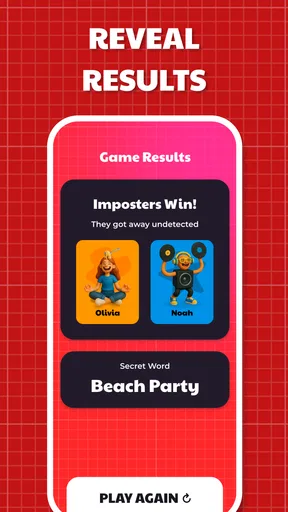
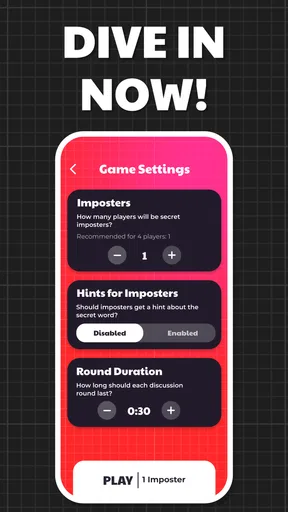
Our Review of Fakeit: Imposter Game
 Analysis by Appyee
I like word games best when they turn a simple prompt into a reason for everyone at the table to watch one another closely. That is the appeal I look for in Imposter Game: Who Is — Fakeit: a quick social contest built around figuring out who is bluffing. It suits a group that wants to talk, tease, and make guesses together, rather than a solo player looking for a quiet puzzle. The fun depends on how people play as much as on the game itself, so the right crowd matters.
Getting a group into the first round
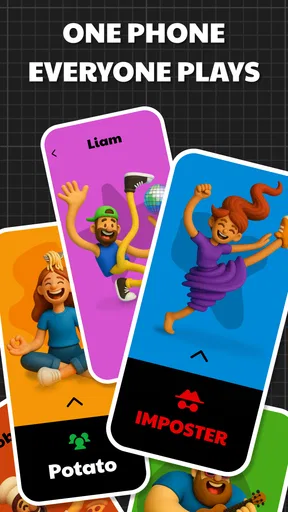
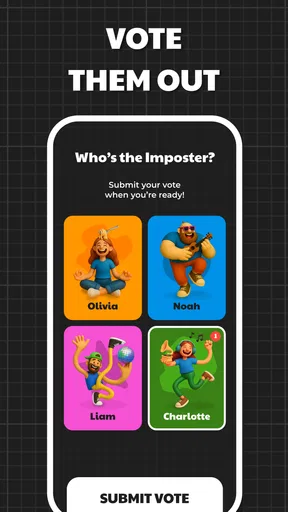
The basic idea is easy to explain before you begin: players receive a word-based prompt, and one person has to hide the fact that they do not share the same information as everyone else. The group talks, listens for suspicious answers, and tries to identify the impostor. That makes the first action less about mastering controls and more about deciding how much to reveal. A confident answer can sound convincing, but an answer that is too polished can make someone look just as suspicious.
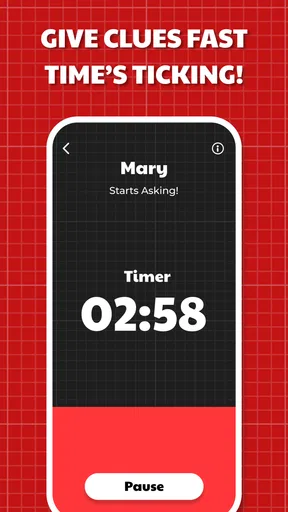
For a first session, I would keep the rules explanation short and agree on a simple speaking order. That gives quieter players a fair chance to contribute and makes it easier to notice who is copying the group’s language. If everyone talks at once, the central deduction challenge gets blurred; a little structure helps the clues stand out without turning a casual game into a formal debate.
The game is a free word party game from smak apps, with optional in-app purchases priced from $7.99 to $59.99 per item. It is rated Everyone, and the current version is 1.5.10, with Android 7.0 or later required. Those details make it straightforward to consider for a mixed-age gathering, although I would still check the purchase screen before handing a device to a child. The listed age rating describes the game’s content category, not how every group will handle teasing or accusations.
How the feedback changes the conversation
The useful feedback in a round is social: a reply either fits what the group seems to know, or it leaves a small gap for someone to question. I enjoy that uncertainty because it gives every player a reason to listen rather than simply wait for a turn. A vague answer might be a clever attempt to stay safe, but it may also be exactly what gives the group a lead. The best moments come when players have to explain their reasoning instead of treating a hunch as proof.
There is a trade-off here. People who already know one another may read familiar habits and expressions into an answer, while strangers have fewer personal cues and must rely more on what is said in the round. Neither situation guarantees a better game. With friends, inside jokes can make the discussion lively but can also distract from the clues; with unfamiliar players, the talk may be less personal and more focused on the prompt.
One practical tip is to ask for a reason rather than immediately naming a suspect. “What made that answer fit?” invites detail and gives the player a chance to clarify, while an instant accusation can shut down useful discussion. I also like to avoid repeating another person’s exact phrasing when it is my turn. That keeps my own answer more informative and makes it harder for the group to confuse agreement with independent thinking.
What counts as a satisfying reward
This is not the kind of word game where the main pleasure comes from steadily filling a collection or beating a long sequence of levels. The immediate payoff is seeing whether the group’s deduction holds up, and whether the impostor’s bluff survives the conversation. A correct call can feel satisfying because it rewards careful listening; a successful bluff can be funny because it turns the same discussion in the opposite direction. The reward is strongest when everyone understands why the winning guess made sense.
That also means the game’s value is closely tied to the people playing. If a group enjoys playful suspicion, the discussion itself becomes part of the entertainment. If the players dislike being challenged or take wrong guesses personally, the same mechanic can feel uncomfortable. I would set a light tone before starting, especially with children or people who have not played social deduction games before: accuse the answer, not the person, and treat a mistaken guess as part of the round.
The game has an average rating of 4.6 from around 18,000 ratings, and it has passed 1 million installs. I read that as a sign that the idea has found an audience, not as a promise that every group will click with it. A word-party format is naturally dependent on conversation, so a lively room can make a modest round feel memorable, while a distracted group may find the same exchange flat.
Why another round can begin so easily
The reset is part of the appeal: once a round’s secret and suspicions are settled, players can start fresh without needing to carry a complicated campaign forward. That makes it handy for a short gap before dinner or a few rounds during a get-together. The changing social roles also give people a reason to try again: someone who was confident as a guesser may want to test a bluff, while a player who was caught early may want another chance to read the group.
For a realistic everyday use, imagine friends waiting for food at home with one phone available and a few minutes to spare. A round can give everyone something to discuss, and the conversation continues naturally after the guess is revealed. It is less suited to a commute where people cannot comfortably talk, or to a setting where players need to stay quiet. The format asks for attention from the group, not just a quick tap between other activities.
Compared with a traditional word puzzle, Fakeit puts less weight on finding a single correct word and more on interpreting other people’s answers. Compared with a general trivia game, it is less about recalling facts and more about reading whether someone’s response belongs. If your group wants a solo challenge, a crossword or a word-search game is a better fit; if it wants a shared conversation with bluffing, this has a clearer purpose.
Gameplay and Features
At its core, Imposter Game: Who Is — Fakeit revolves around the concept of deception. You’re either an innocent crew member trying to complete tasks or the cunning imposter trying to sabotage the crew. The game kicks off with you and your friends (or random online players) aboard a spaceship. The catch? One or more of you are imposters, and it's your job to figure out who they are before it's too late.
The game shines with its multiplayer mode, which allows you to connect with friends or players worldwide. You can create private rooms or join public games, making it easy to find a match anytime. The interactive chat feature is a game-changer, letting you communicate with other players to strategize or throw them off the scent—depending on which side you’re on.
Graphics and Sound
The graphics are simple yet effective, providing a clear and engaging environment that’s perfect for the game’s theme. The characters are customizable, which adds a fun personal touch. As for the sound, the ominous background music sets the stage for tension and excitement. The sound effects are crisp and add to the immersive experience, especially when sabotage or a meeting is called.
Strategy Tips
Whether you're a crewmate or an imposter, having a strategy is key. For crewmates, it’s all about observation. Keep an eye on other players' movements, and don’t forget to complete your tasks. If you suspect someone, call a meeting and discuss your suspicions. But remember, don’t be too quick to point fingers!
If you’re the imposter, your goal is to blend in. Fake tasks convincingly, create alibis, and be strategic about sabotages. The art of deception is your best friend, so use it wisely. But beware, one wrong move could expose you!
Why It’s So Addictive
The addictive nature of Imposter Game: Who Is — Fakeit comes from its unpredictability. Every game is different, thanks to the dynamic interactions between players. The blend of teamwork and betrayal keeps you on the edge of your seat, making each victory or defeat feel incredibly satisfying.
Moreover, the game encourages social interaction, which makes it a hit during parties or casual hangouts. It’s a game that’s easy to learn but hard to master, and that’s where its charm lies.
Final Thoughts
In conclusion, Imposter Game: Who Is — Fakeit is a delightful mix of strategy, fun, and a bit of chaos. Whether you're playing with friends or making new ones online, it's an experience that’s both engaging and entertaining. The game’s simplicity and interactive elements make it accessible to all ages, while the strategic depth keeps seasoned players coming back for more.
If you haven’t tried it yet, I highly recommend giving it a go. You might find yourself hooked, just like I did. Ready to uncover the imposter? Or maybe… play the perfect deception?
Who will enjoy it, and who may prefer something else
I would recommend this to people who like talking through a clue, spotting hesitation, and laughing about a close call afterward. It can work especially well for a small gathering where everyone is willing to take a turn speaking. The word-game label matters: the words are a starting point for a social bluff, not an invitation to sit silently and solve a vocabulary challenge on your own.
I would skip it if your group wants a strictly competitive experience with clear, skill-based scoring, or if players are uncomfortable being put on the spot. It is also not my first choice for someone who wants a game that remains satisfying without other people present. The social exchange is the point, and no amount of enthusiasm from one player can replace a group that is willing to participate.
Small choices that make the session smoother
When introducing the game, I would tell new players that a short answer is not automatically suspicious and a confident answer is not automatically honest. That simple expectation can prevent the group from settling on shallow tells. I would also let each player finish before debating an answer; interruptions make it harder to compare what people actually said and tend to reward the loudest voice rather than the best deduction.
If you are choosing between a private get-together and a public match, think about what you want from the conversation. Familiar players can bring warmth and running jokes, while a public room may offer a different mix of personalities. The latter can be a way to play when friends are unavailable, but I would approach it with the same basic care as any open multiplayer chat: keep personal details private and leave a room if the tone stops being enjoyable.
For a family session, I would keep the discussion friendly and avoid turning a wrong guess into a personal criticism. For adult friends, a little theatrical suspicion can add to the fun, but it works best when everyone is in on the joke. The Everyone rating makes the game broadly approachable; it does not mean every style of banter suits every age or group.
My verdict on the loop
The loop works when the group moves from a prompt to an answer, from that answer to discussion, and from discussion to a reveal that gives everyone a reason to try again. Its reward is not a long-term progression system but the human moment when a careful observation pays off—or when a convincing bluff slips through. That makes it a useful pick for social downtime rather than a replacement for a deep word-puzzle app.
My main reservation is that the fun can vary sharply with the room. A quiet or impatient group may rush through the reasoning, and a group that dislikes suspicion may find the central premise less charming than it sounds. But if you have friends who enjoy playful debate, Fakeit offers a clear, easy-to-share reason to pay attention to every answer. I would start with a few casual rounds, see whether people enjoy the discussion, and let that decide whether the next session begins.
Privacy and Permissions
See what permissions an app requests and how it handles your data.
- Photos/Media/Files
- read the contents of your USB storage, modify or delete the contents of your USB storage
- Storage
- read the contents of your USB storage, modify or delete the contents of your USB storage
- Camera
- take pictures and videos
- Wi-Fi connection information
- view Wi-Fi connections
- Other
- view network connections, full network access, run at startup, draw over other apps, control vibration, prevent device from sleeping, Google Play license check, read Google service configuration
Verdict
Strengths of Fakeit: Imposter Game
- Engaging multiplayer experience
- Simple and intuitive controls
- Frequent updates and events
- Visually appealing graphics
- Cross-platform compatibility
Limitations of Fakeit: Imposter Game
- In-app purchases can be pricey
- Occasional server connectivity issues
- Limited character customization
- Repetitive tasks may bore some
- Ads can disrupt gameplay flow
Other Releases by smak apps
View All
Similar Picks in This Category
View All
Word Search - Word Puzzle Game
Bluetile4.8

Word Search Quest - Puzzles
Blackout Lab4.8

CodyCross: Crossword Puzzles
Fanatee, Inc.4.7

Words of Wonders: Crossword
Fugo Games4.9

Wordscapes: Word puzzle game
PeopleFun4.7

Word Search Explorer
PlaySimple Games4.9
Frequently Asked Questions
What is the main objective of Imposter Game: Who Is — Fakeit?
Imposter Game: Who Is — Fakeit challenges players to identify the imposter among a group of characters. Set in a multiplayer environment, the primary goal is to collaborate with other players to complete tasks while trying to deduce who the imposter is before they sabotage the mission.
Is Imposter Game: Who Is — Fakeit free to download and play?
Yes, Imposter Game: Who Is — Fakeit is free to download and play on both Android and iOS platforms. However, the game may include in-app purchases and ads, which can be disabled by purchasing the premium version or specific items to enhance the gameplay experience.
Can I play Imposter Game: Who Is — Fakeit with friends?
Absolutely! Imposter Game: Who Is — Fakeit offers a multiplayer feature, allowing you to invite and play with friends. You can either host a private game with specific players or join public games to meet new people and enjoy the challenge together.
What are the device requirements for Imposter Game: Who Is — Fakeit?
To ensure smooth gameplay, Imposter Game: Who Is — Fakeit requires Android devices to run on version 5.0 or higher, and iOS devices need to have iOS 10.0 or later. It's recommended to have at least 1GB of free storage for optimal performance and updates.
Does Imposter Game: Who Is — Fakeit support different languages?
Yes, Imposter Game: Who Is — Fakeit supports multiple languages to cater to a global audience. Players can choose their preferred language in the settings menu, making it accessible and enjoyable for non-English speakers as well.
Play our best games!


